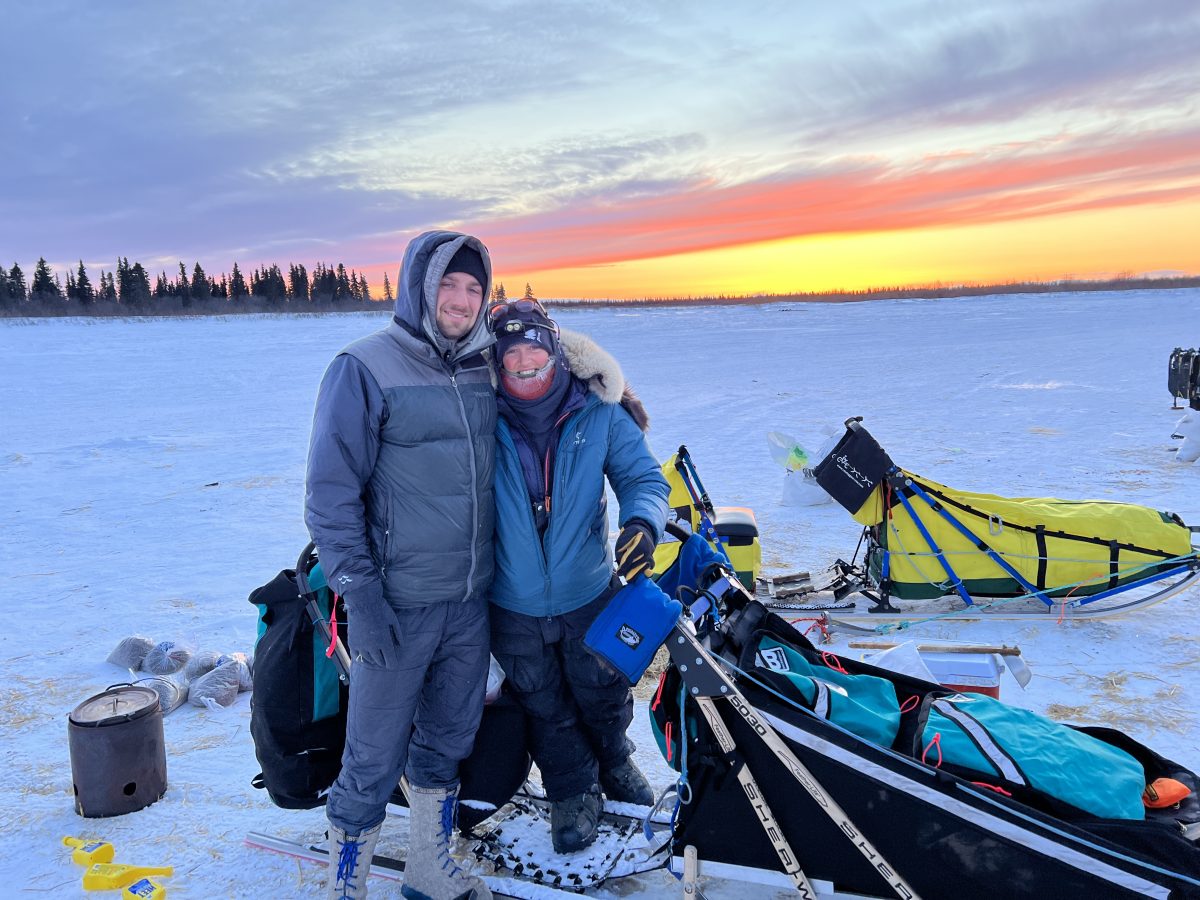
How to Dress:
Late September - March*
*Temps may range between -30F and +30F. Get a weather forecast before your trip!
Our famous “How to Dress” Video!
Pro Tips
Bring your own stuff. Your own clothes are going to be more comfortable, and more familiar than anything you can borrow when you get here. And you can take them with you on ALL of your Alaskan adventures! Try your best to outfit yourself for your trip.
Practice at Home. Put all of your layers on your body at home before your trip. Check to see how they all fit together. Hint: Your base layer leggings may be a Small, but your jacket may need to be a Large! You’ll get bigger the more you layer.
Check a Bag! Are you trying to save money by skipping checked bag fees? Don’t be silly! Warm layers are so important in Alaska, and all that good stuff isn’t going to fit in your carry on. Pay for the checked bags.
Let's Layer Up!
Click the + in each category to explore ALL of the items you’ll want for this tour.
Base Layers
- Heavy socks – Just one warm pair will do. Layering your socks can squeeze your toes, reducing circulation, and actually making you colder.
- Long underwear / leggings / long johns – This layer goes by many names. The thicker, the better.
- Long-sleeved shirt – Choose a snug-fitting, pull-over, long-sleeve shirt with a high neckline. The thicker the better.
Mid Layers
- Sweatpants – These should be thick, but also flexible. Elastic at the ankles is ideal. We do NOT recommend blue jeans!
- Sweatshirt or sweater – Pullover style is best, with a high neckline. Hooded is ideal.
Outer Layers
- Snowpants – Not rain or wind pants. Your ski pants may be OK here, but make sure that you can fit long underwear and sweatpants underneath the ski pants.
- Winter boots – If possible, avoid leather and rubber because they conduct the cold. Choose canvas, fur, or felt when possible. Consider buying a half-size “too big” to make room for warm socks and heat packs. Remember, cramming your toes together can reduce circulation and actually cause your feet to get colder.
- Jackets – Get this as warm as you can find! Feather down is the insulation of choice for Fairbanks’ dry, cold winters. If the outside layer of your jacket is thin/fragile, you may want to add a thin, exterior “shell.”
- “Touch screen” gloves – A tight-fitting pair of gloves (with fingers) will give you the dexterity you need for harnessing dogs and using your phone for taking photos.
- Warm mittens – When it’s time to take the ride, swap out your fingered gloves, for a pair of mittens instead. Mittens have a slot for the thumb only, and allows the rest of your fingers to touch and share heat. This is best for circulation, making mittens much warmer than gloves.
Head, Neck, Face
- Neck Gator – We like Turtle Fur brand best, in the simple “tube” style. We do not recommend hooded balaclavas with drawstrings, as they are complicated and not particularly comfortable. Scarves are also a no-go, as they tend to droop, or gap, and don’t provide very good coverage.
- Winter hat – The goals here are to 1) trap heat that would otherwise escape from the top of your head; and 2) cover any bare skin on your forehead or ears. Remember there will be additional wind chill while being pulled by the dogs! Hoods, headbands and ear muffs simply don’t cut it in this category. Additional tip: Avoid flap hats. Ear flaps frequently conflict with the fit of your neck gator.
- Eyewear (Oct – Feb) – For most of the winter, we suggest avoiding eyewear on this tour. When you cover your face and mouth with your neck gator, warm air is forced upward, and will fog your glasses. In cold weather, this immediately freezes and becomes a layer of stubborn ice. Goggles are not typically recommended for this same reason.
- Eyewear (Feb-March) – As the sun returns to Alaska in late winter, sunglasses can be really nice to protect eyes from the sun’s glare off the snow. But you may still need to balance covering your face v. covering your eyes.
- Brimmed Hat – To be worn underneath your regular winter hat. A brimmed hat is optional, but can be really helpful on days when it’s actively snowing, as a way to block snowflakes from getting in your eyes. (More painful than you think!)
- Make Up – Choose waterproof mascara. Cold air can cause eyes to water, so make sure you’re looking your best by choosing waterproof eye make up.
- Long Hair – If you have long hair, we highly encourage you to braid it for your tour. Loose, long hair easily gets caught in jacket zippers or wanders into your mouth. If left on the outside of your jacket, it can also push your neck gator down (exposing your face), or push your winter hat up (exposing your forehead). The best long hairstyle for dog sledding is in two braids, stuffed down inside of your neck gator and your jacket.
Other
- Heat Packs – So cheap, and so easy! Disposable heat packs can be purchased in Fairbanks at most hardware and grocery stores. Just open the cellophane wrapper and expose to air for a few minutes. Various designs are available for hands, feet and even your lower back! These should be opened and inserted into gloves, boots, etc. BEFORE you feel cold. Warning: Please secure these on your person. Our dogs will eat these, and can get very sick.