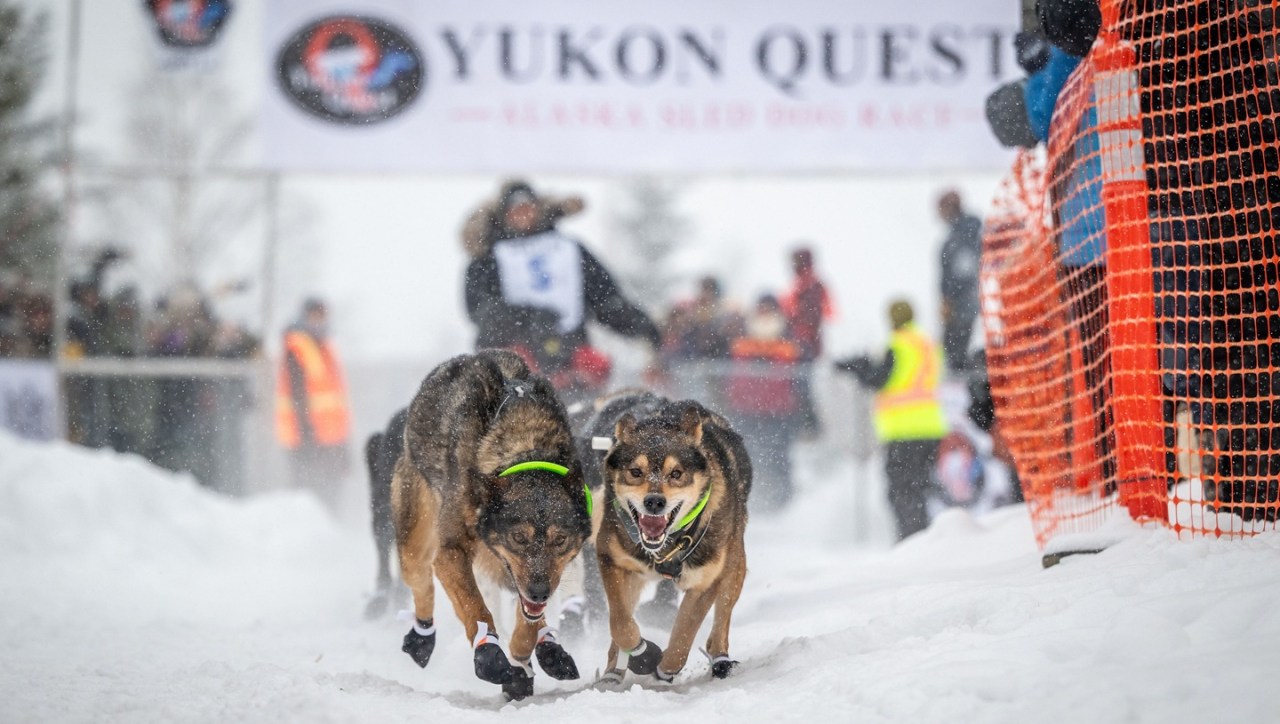
Earlier this week, the Yukon Quest Alaska made the decision to offer its first ever 750-mile race in February of 2026. They are scrapping their long-standing 300-miler, but retaining the very popular 80 in addition to the 750. How did they come to this decision? And what happened to the original 1000-mile Yukon Quest that ran between Fairbanks and Whitehorse? Is that ever coming back?

In March of 2020, the world changed in response to the COVID-19 pandemic. Years later, some things have gone back to their pre-pandemic status, while other things will never be the same. The 1,000-mile Yukon Quest did not run in 2021 and 2022, due to the challenges of crossing the border between the US and Canada. Instead, each country had their own, shorter versions of the Quest during this time, and enjoyed the freedom to choose new routes and set new rules. In May of 2022, as the governing officials in Alaska and Canada began cooperatively planning a return to their international event for 2023, talks broke down and resulted in a complete dissolution of the original race.
The sticking point? Mandatory rest. Canadian race officials wanted more mandatory rests added to the 1,000-mile event, while Alaskan race officials wanted to keep the same or less rest from previous years. Debating the merits of this may be a whole other blog post someday… But for now, suffice it to say that ultimately every race and every musher will tell you the same thing: We all want what’s best for the dogs. But the two different sides have two different ideas about how to achieve that through mandatory rest v. musher autonomy.

Following the split, each entity continued to organize their own mid-distance races. However, each side has struggled to find a safe, consistent route for offering anything longer than 300 miles. The Canadian side is foundering (pun intended) because the Yukon River no longer freezes reliably between Whitehorse and Dawson City. (That’s right. Those fans who are still waiting for a revival of the 1,000 mile “original” Yukon Quest will be waiting a very long time.. Like, until the next ice age.) And the Alaskan side promised a Fairbanks-to-Tok route to mushers in both ’23 and ’24, but weren’t able to finally deliver on this trail until ’25. Why was that, and what does it have to do with this year?
Simply put, it’s all about the jumble ice between Circle and Eagle. Trail crews on snowmachine (snowmobile) are necessary for establishing and marking trails for mushers and dogs before our races begin. The Yukon River narrows in mountainous country between Circle and Eagle, creating stunning scenery and horrendous jumble ice. Driving snowmachines through here takes a toll on both machine and driver, and often requires days of labor with a chainsaw to create safe passageway for dogs. The jumble ice between Circle and Eagle is so notoriously bad, that there are no guarantees from year to year about being able to run machines – or dogs – through this route. (So how did trail crews do it for the 40ish years that the 1,000 mile Yukon Quest was running? Good question. But times, and people, change.) Anyway, every dog race has a trail crew, and we couldn’t do what we do without them, so we gotta keep them happy!

And say, while we’re on the topic of making people happy, let’s talk about fans and sponsors. While the Fairbanks-Eagle-Tok route was incredibly fun for mushers, the finish in Tok left much to be desired for Fairbanks fans and sponsors. In fact, several race sponsors told YQA this summer that if they couldn’t figure out a way to finish the race in Fairbanks, they wouldn’t continue to sponsor the event. A Fairbanks finish allows for more spectators, more fanfare, and more media, which ultimately means more exposure for the Fairbanks-based businesses who sponsor the event. Fair enough. Sponsorship is support for a beloved event, but it’s also advertising for the sponsor. So we gotta keep the sponsors happy, too!

Essentially then, the YQA wanted to put on a race longer than 300 miles, that would start and finish in Fairbanks, and wouldn’t involve going from Circle to Eagle. As far as any of us could tell, there were only two options…
The first and most obvious option would be for mushers to retrace their steps — an out-and-back. Mushers could go from Fairbanks to Circle, as they always have on the traditional Yukon Quest trail, and then just come on back to Fairbanks on that same route. I say “just,” but this route would mean going back over the infamous Birch Creek and the hellacious Eagle and Rosebud summits twice – on the way out, and the way back. For mushers who may be interested in running both the Yukon Quest Alaska in February, and then the Iditarod in March, the risk of injury posed by climbing and ascending these two peaks two times simply would not be worth it. Mushers would feel inclined to choose one race or the other. And for mushers based in Two Rivers, this route would require their dog teams to pass by home on the way to the finish line in Fairbanks. This can be hard for dogs who may be tired near the end of their long journey, or are just exceptionally home-oriented. Yes, Two Rivers teams had to do this in previous 1,000-mile Yukon Quests that finished in Fairbanks, but for many, this was very difficult, and several Two Rivers teams were reported to have simply shut down and quit along this section of trail.

So, if retracing the first 200 miles of the Yukon Quest trail isn’t a good idea, and going south from Circle isn’t a reliable route, then that leaves only one more option, which is to go north from Circle, following the Yukon River to the remote communities of Fort Yukon, Beaver, Steven’s Village, and Rampart. The proposed route will also take mushers to Manley, Tolovana and Nenana, finally finishing in Fairbanks.
This new 750-mile Yukon Quest checks all of the boxes: It starts and finishes in Fairbanks, it will be easy enough for trail crews to run in advance of the race, and it’s not a suicidal out-and-back. The distance will be approximately 750 miles, making it truly unique in North America, as the second longest sled dog race in the United States by over 300. Internationally, it is comparable only to the Finnmarkslopet in Norway. Serious mushers will be able to run both the YQA and the Iditarod, if they choose. But a 750-mile race is also a great stand-alone distance for mushers who are looking to do only one big race in their season, or qualify for the Iditarod in one fail swoop (pending Iditarod’s approval of this idea). The only downside? In opting for the 750-miler, YQA decided to scrap their 300-mile race. Why? In short, YQA resources are tight, and putting effort into one main event is easier than diving those resources multiple ways. Additionally, there are other 300-mile race options in Alaska, Canada, and in the Lower 48.
As for this kennel, we’re stoked about a 750-mile Yukon Quest! We can’t wait to sign up on the first day in November, and defend our Yukon Quest Champion title. We look forward to seeing old and new faces on this new route.