Happy July! Let’s talk about hot dogs. No, not the frankfurter type. I mean hot sled dogs. When is it too hot for sled dogs to run? How do we know if our dogs are overheating? And what are the safest ways to keep our dogs cool?
Side note: We are Alaskan Husky experts only. And though much of what you read below will apply to all dogs, some differences between breeds do exist. Have questions about your favorite breed? Consult your veterinarian. Then leave us a comment letting us know what you learned!

Why Hyperthermia is Dangerous
The scientific term for overheating is hyperthermia. Why is it a big deal? At minimum, a dog experiencing hyperthermia is extremely uncomfortable and stressed out. If a dog is too hot for too long, or too often, they can experience brain damage or even death. A dog who has experienced hyperthermia even once is likely to have a lowered heat tolerance in the future, leading to repeat hyperthermic events.
Is My Dog Overheating?
It’s important to remember that just like with humans, individual dogs will differ in their tolerance to heat – even in dogs of the same breed! So know your dog, and know what to look for. Your dog may be overheating if you see the following:
- Dog stands with legs spread far apart. The body’s auto-response here is to allow as much airflow as possible along the belly, legs, and armpits of the dog. Notice the short / non-existence hair here? (Yes, even on heavily coated huskies!)
- Dog pants very heavily. Panting may be clearly audible; louder than normal; sound scratchy or gurgly. Unlike humans, dogs don’t sweat. They dump off excess heat through their mouths by panting.
- Tongue is stretched out very long, or fanned out very wide. Tongue may be hanging out to the front or side of the mouth.
- Top of the trachea may be visible. If your dog is panting heavily, you should easily be able to see far into their mouths. Can you see the top of their windpipe?
- Dog has an elevated temperature – 103.5 F or more. Did you know you can use a standard stick thermometer to take your dog’s temperature? As long as your dog will allow you to stick a thermometer up his butt! You don’t have to go far. Just until you feel gentle resistance and the metal tip of the thermometer is fully covered. Good dog!

Help! My dog is too hot. What do I do?
If you think your dog is overheating, here are some things you can do:
- Get them in the shade.
- Provide a breeze using a fan, or get them in a windy spot.
- Cool their feet down. In addition to dumping heat through their mouths, dogs also dump heat through their feet. Getting their feet in water is ideal, but cool mud and green grass can also work in a pinch.
- Splash water on armpits, chest, belly, and between legs. Remember, fur is thinnest on the underside of the body, so aim your water or cool air here.
- Offer water to drink. Your dog may be panting too hard to drink immediately, but keep water available for when they’re ready.
- Let them rest. Let your dog rest for as long as possible after a hyperthermic event.
Prevention
As mentioned above, hyperthermia is very dangerous for dogs. Even one episode of overheating can lead to a decreased tolerance for heat in the future. Brain damage and death are also possible. So how do we prevent overheating in our best buds?
- Keep your dog off of hot surfaces. Yeah, their feet are tougher than ours, but they’re still more sensitive than you might think. Black asphalt is too hot for your dog’s feet in hot weather, but even some types of plastic decking, beach sand, and astroturf can all be too extreme.
- Watch your dog for signs if discomfort. Do they pick their feet up while standing? Is their gait abnormal while walking? Is the dog attempting to move to a difference surface? That spot may be too hot.
- Be active during the cooler times of day. Get up early or stay up late to get your dog they exercise they need when the temperatures aren’t so hot.
- Establish temperature cut-offs and conditions, and forgive yourself for sticking to them. We love keeping our dogs active all summer long, but there are times when conditions just don’t allow for that. At Black Spruce Dog Sledding, our dogs don’t exercise when it’s warmer than 68F. They also don’t exercise when forest fire smoke is deamed “unhealthy for sensitive groups.”
- Use water. Consider getting your dog wet before you go for your walk. Or try playing fetch in the water, instead of the backyard.
- Brush! Keep up on brushing throughout the warm weather season. We like the Furminator brand for our Alaskan Huskies.
- Know your dog. Get to know your own dog and what they can handle. If your dog likes to be active in warm weather, check in regularly for signs of overheating.

Other Strategies
Here are some other strategies we’ve heard of for keeping dogs cool. But we’re putting these in a separate category because some of them are problematic…
- Shaving. Most experts agree that shaving double-coated dogs (like huskies) is a bad idea. While brushing can be beneficial for removing the undercoat, shaving removes all of the fur, disrupting your dog’s natural hair growth cycle, and creating other problems with biting insects, UV exposure, and complete loss of all natural insulation for keeping cool.
- Bandanas. I’ve seen soaking wet, and even frozen wet bandanas used for cooling dogs down. While this may work well for short-coated dogs, it doesn’t do much for double-coated huskies with their ultra thick, furry necks.
- Booties. Yes, booties create a physical barrier between your dog’s foot and a hot surface. But booties also trap heat in the dog’s body! Remember that dogs release heat through their feet, similar to how humans release heat from the tops of our heads. So while booties may protect your dog’s feet from hot surfaces, your dog’s entire body may be heating up.

Your Dog and Water
While it’s not true for all huskies, many of the dogs at Black Spruce Dog Sledding love water! Our Sled Dog Safari Tours even feature photo stops at our kiddie-pool cooling stations.
To teach your dog to love the water, you would ideally start when they’re young. But dogs can become more heat sensitive as they age, so it’s never too late for your dog to learn to love the water.
Some tricks:
- Get in the water yourself, and use treats, affection, toys and coaxing to encourage your dog to join you.
- If your dog likes to fetch, tossing a favorite toy into shallow, still water can be a great motivator for them to get in.
- Lift and set your dog into a kiddie pool, and then praise them for as long as they stay in it.
Always be respectful of your dog when encouraging them to interact with bodies of water. Never force your dog swim by pulling them into deep water through the use of a leash, or dropping them into deep water from a boat or dock. In addition to making your dog needlessly stressed out, you’re breaking their trust in you, and setting them up to be afraid of water in the future.
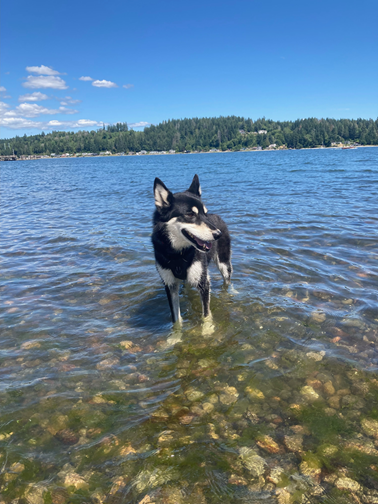
Remember that your dog doesn’t need to be completely submerged to reap the benefits of being in the water. Just getting their feet wet can be hugely beneficial in preventing or arresting hyperthermia.